

Todas as skills
Pessoal
Condicionantes em plano dia a dia
As condicionantes da viagem viram um plano dia a dia com folgas e orçamento.
A demo usa dados fictícios. A saída mostrada é o que a skill produziu com essa entrada de exemplo.
Experimenta em 3 passos
- 01
Copia a pasta, ou só o SKILL.md, para .claude/skills/ no teu projeto (ou para ~/.claude/skills/ para usares em todo o lado).
- 02
Abre o Claude Code e pede-a pelo nome, por exemplo: Usa a skill travel-itinerary nos meus ficheiros.
- 03
Confirma o resultado. As skills criam um ficheiro novo e nunca substituem os teus.
Ver um exemplo de execução
Entrada de exemplo · input.md
# Trip request

- Destination: Porto, Portugal
- Dates: Thu 12 Nov to Sun 15 Nov 2026 (arrive Thursday late morning, leave Sunday evening)
- Travellers: 1 adult, me
- Budget: 800 EUR total, not counting flights
- Interests: tiles and old buildings, food markets, river views, one museum
- Pace: relaxed, I get tired with more than two main things a day
- Stay: a small guesthouse near the centre, 3 nights
- Must have: a long lunch every day, one early night
- Avoid: long queues, night buses
Saída de exemplo · output.md
# Porto: Thu 12 Nov to Sun 15 Nov 2026
Pace: relaxed (two main things a day at most). Budget: 800 EUR, flights not included.

## Budget split (your numbers to adjust)
These are shares of your budget, not quoted prices. Check real prices before you book.

| Category | Share | Amount | Per unit |
|---|---|---|---|
| Stay (3 nights) | 40% | 320 EUR | about 107 per night |
| Food | 25% | 200 EUR | about 50 per day |
| Local transport | 10% | 80 EUR | about 20 per day |
| Activities | 15% | 120 EUR | - |
| Reserve | 10% | 80 EUR | - |

## Day 1, Thu 12 Nov (arrival)
- Late morning: arrive, drop bags at the guesthouse. Check: check-in and bag-drop times.
- Lunch (long): a simple place near the centre. Check: opening hours and prices.
- Afternoon, main thing 1: slow walk through the old centre to look at tiled buildings.
- Buffer: rest at the guesthouse.
- Evening: relaxed dinner nearby.

## Day 2, Fri 13 Nov
- Morning, main thing 1: the museum you chose. Check: opening hours, ticket price, whether timed tickets avoid queues.
- Lunch (long): close to the museum.
- Buffer: free hour, coffee, sit down.
- Afternoon, main thing 2: riverside walk. Check: how long the walk is for your energy.
- Evening: free.

## Day 3, Sat 14 Nov
- Morning, main thing 1: a covered food market. Check: opening hours, which days stalls are open.
- Lunch (long): eat at or near the market. Check: prices.
- Buffer: back to the guesthouse for a break.
- Late afternoon, main thing 2: a viewpoint across the river for the light. Check: sunset time and how to get there.
- Early night, as you asked.

## Day 4, Sun 15 Nov (departure evening)
- Morning: slow breakfast, pack, leave bags. Check: bag storage after check-out.
- Main thing (optional): one more tiled building near the guesthouse.
- Lunch (long).
- Buffer: leave a full hour before heading to the airport or station.
- Evening: travel. Check: a daytime or early-evening option, as you avoid night buses.

## Before you go
- Check opening hours and prices for every item marked Check.
- Book the guesthouse and transport yourself; nothing here is booked.
- Check entry rules and local weather for the dates.
A skill · SKILL.md
---
name: travel-itinerary
description: Turns trip constraints (dates, budget, interests, pace) into a day-by-day itinerary with buffers, a rough budget split and "check opening hours and prices" notes. Use when someone wants a draft trip plan to refine. Never states prices, opening hours or availability as facts and never books anything.
---
# Travel Itinerary
Your dates and wishes become a relaxed day-by-day draft you can verify and book yourself.

## When to use
- The user has a destination and dates and wants a first-draft plan.
- The user wants the budget split sensibly before looking at real prices.

## Inputs
- Destination, exact dates, arrival and departure times, number of travellers.
- Total budget and what it excludes (for example flights). Ask if unclear.
- Interests, pace (relaxed / normal / packed), must-haves and things to avoid.

## Steps
1. List the usable days. Arrival and departure days are partial: plan fewer things on them.
2. Set the daily load from the pace: relaxed = at most two main activities, normal = three, packed = four. Add a meal block and a buffer block every day.
3. Split the budget across stay, food, local transport, activities and a 10% reserve. Use percentages the user can change and compute amounts with code. Label them "budget split", not prices.
4. Group activities by area so days do not zigzag. Use well-known kinds of places from the interests; name a specific venue only if the user named it, otherwise write a type such as "a covered food market".
5. Put the user's must-haves in first (long lunch, early night), then the interests.
6. After each activity add "Check: opening hours, price, booking needed".
7. Add a short "Before you go" list: things to check or book yourself.

## Output
Write a new file `itinerary.md` next to the input (if it exists, use `itinerary-2.md`). Never overwrite the input. Template:
```
# <Destination>: <dates>
Pace: <pace>. Budget: <total> (<what it excludes>)
## Budget split (your numbers to adjust)
| Category | Share | Amount | Per day |
## Day 1 <date>
- Morning / Lunch / Afternoon / Buffer / Evening
  - Check: ...
## Before you go
```

## Rules
- Never invent prices, opening hours, availability, transport times or events; write "check" instead.
- Never book, reserve or pay for anything; the user does that.
- Budget figures are the user's allocation, not quotes. Say so.
- Every day keeps a buffer block and respects the stated pace.
- Ask before assuming unclear dates, budget scope or mobility needs.
- Write results to a new file, never overwrite the user's files.
- Keep the user's data local.
- Out of scope: visa, health, insurance or legal advice; point to official sources to check.
As skills ajudam-te a ler e a organizar. Não são aconselhamento jurídico, médico, fiscal ou financeiro.
Mais skills
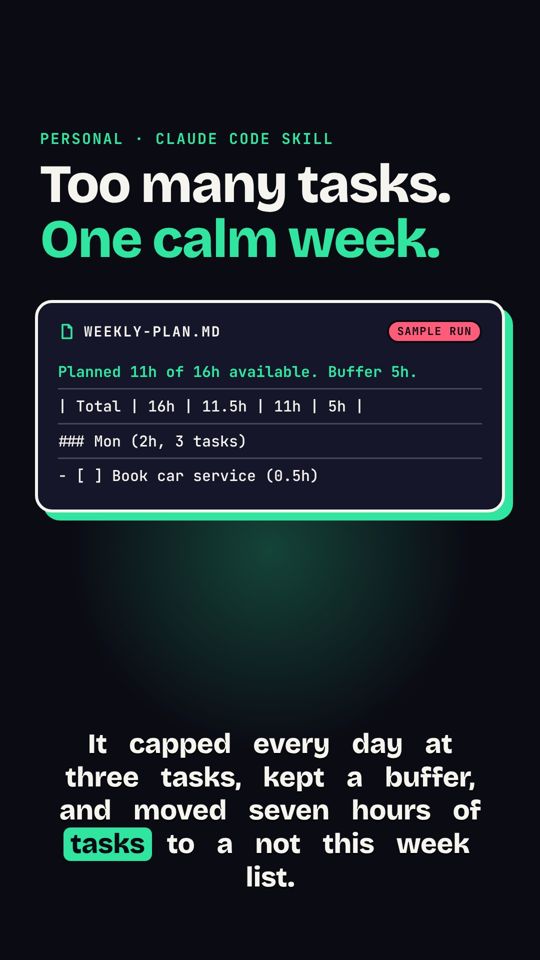 Lista de tarefas em plano semanalUma lista de tarefas desorganizada vira um plano semanal calmo, com três coisas por dia.
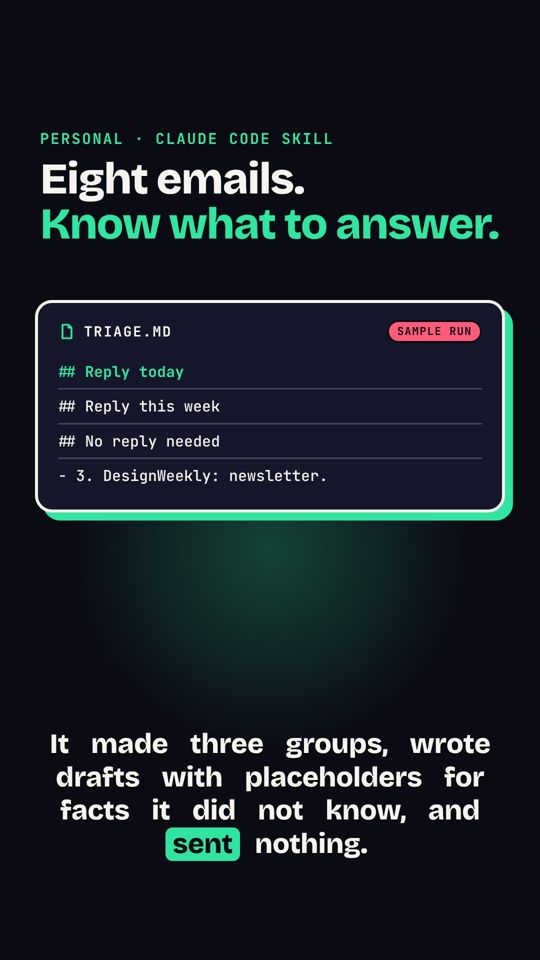 Emails em prioridades e rascunhosEmails colados viram uma lista de prioridades com rascunhos de resposta.
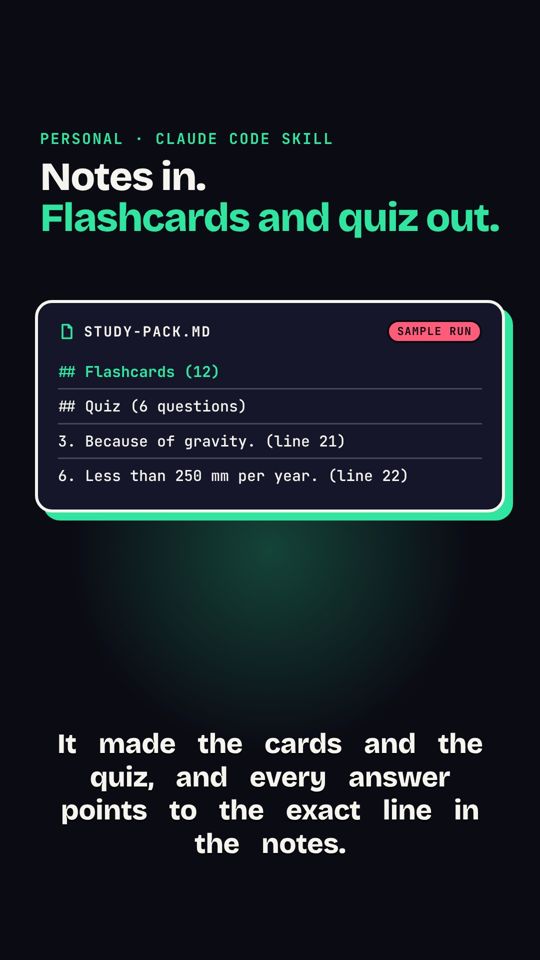 Apontamentos em cartões e quizApontamentos de estudo viram cartões de memorização e um quiz curto.